
Tiwaz: The Rune of the Warrior God
There is a moment before battle when a warrior must make a choice — not whether to fight, but whether the cause is worth dying for. The ancient Norse had a symbol for that moment. They called it Tiwaz.
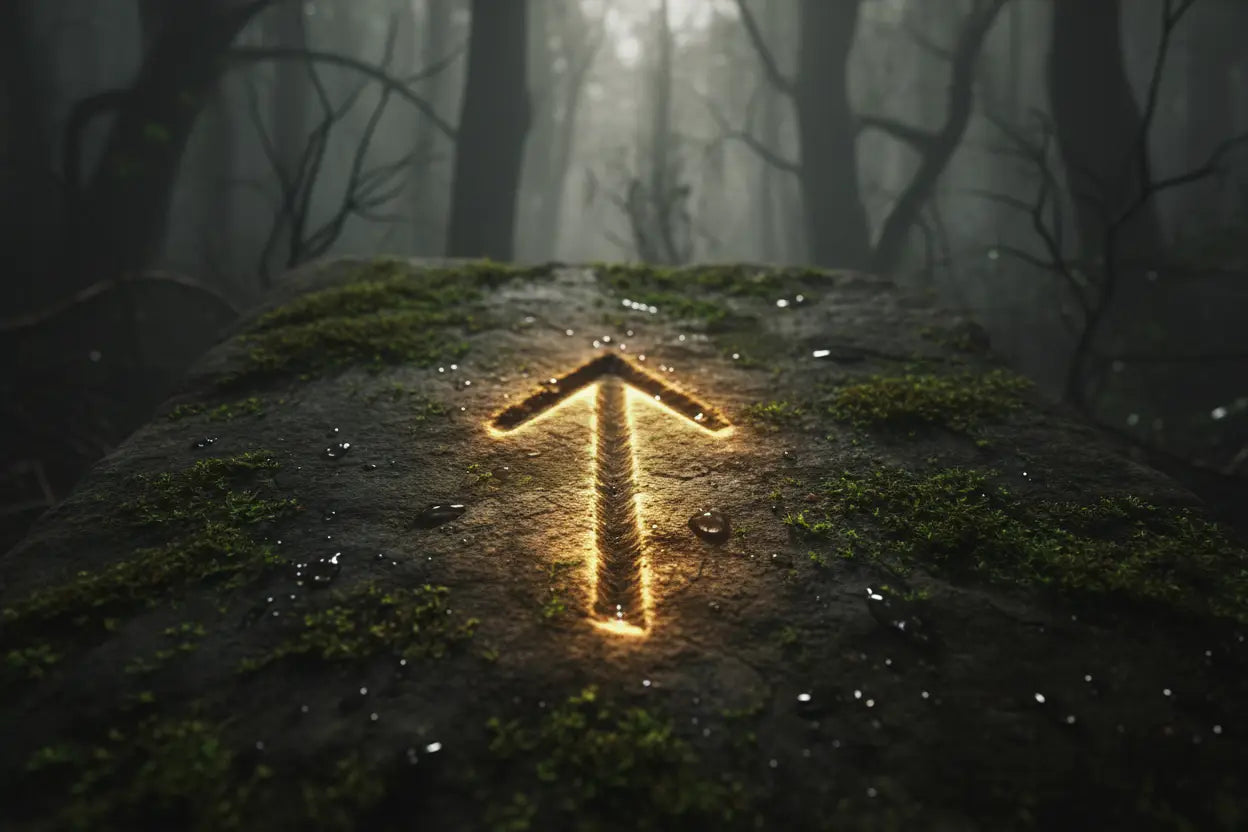
Shaped like an arrow pointing skyward, Tiwaz is one of the oldest runes in the Elder Futhark. It predates the Viking Age by centuries, and its roots stretch back to Proto-Germanic traditions that honored a sky god known simply as Tiwaz — the divine embodiment of law, order, and righteous conflict.
The God Behind the Rune
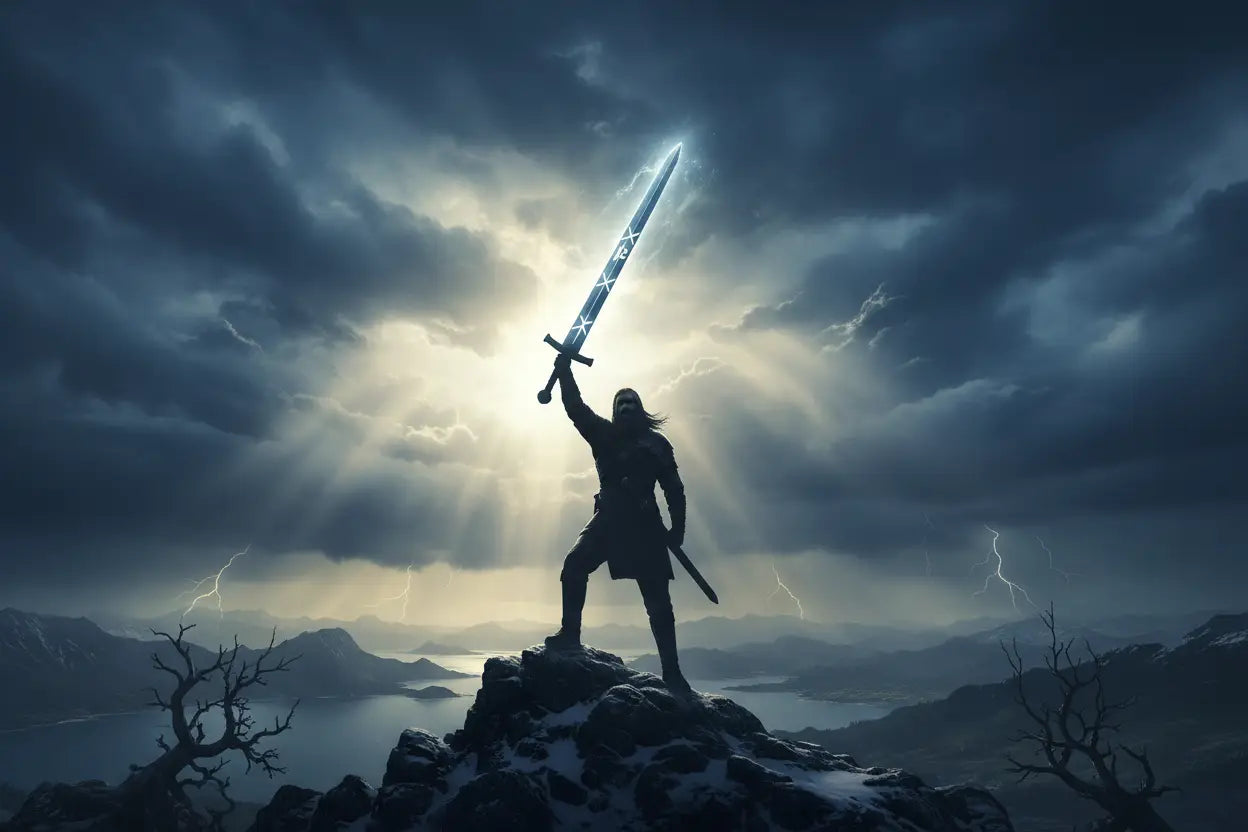
By the time the Norse sagas were written, Tiwaz had become Tyr — the one-handed god of justice and war. His story is one of the most quietly powerful in all of Norse mythology.
When the gods needed to bind the great wolf Fenrir, they knew no ordinary chain could hold him. Fenrir agreed to be bound only if one of the gods placed a hand in his mouth as a pledge of good faith. Tyr stepped forward. He knew the wolf would not be released. He knew what it would cost him. He placed his hand between Fenrir's jaws anyway.
When Fenrir realized he had been deceived, he bit off Tyr's hand at the wrist.
Tyr lost his hand so that the world could be safe. That is the kind of justice Tiwaz represents — not the easy kind, but the kind that demands something of you.
What Tiwaz Means
The Tiwaz rune carries several layers of meaning that have been consistent across centuries of runic tradition:
Justice and law — Tyr was the presiding deity over the Norse thing, the assembly where disputes were settled and laws were made. Tiwaz was his symbol, invoked when fairness and order were needed.
Sacrifice — The myth of Tyr's hand is inseparable from the rune. Tiwaz is not just about winning. It is about being willing to pay the price for what is right.
Victory in battle — Norse warriors carved Tiwaz into their sword blades and shield rims before combat — not to guarantee survival, but to align themselves with a cause worthy of the fight.
Honor and integrity — In the Sigrdrífumál, the Valkyrie Sigrdrífa instructs the hero Sigurd to carve victory runes on his sword and name Tyr twice. The implication is clear: true victory belongs to those who fight with honor.
Tiwaz in the Elder Futhark
The Elder Futhark — the oldest runic alphabet, used from roughly the 2nd to the 8th century AD — contains 24 runes, each with its own name, sound, and symbolic meaning. Tiwaz is the 17th rune, associated with the phonetic sound T.
In runic divination and meditation traditions, Tiwaz is often drawn when questions of fairness, courage, or difficult decisions arise. It does not promise easy answers. It asks whether you are willing to act rightly even when it costs you something.
A Symbol That Has Endured
What is remarkable about Tiwaz is how consistently it has been found across the archaeological record. Runic inscriptions bearing Tiwaz have been discovered on weapons, amulets, and burial objects across Scandinavia, Germany, and the British Isles — spanning more than a thousand years of use.
The rune survived the Christianization of Scandinavia not because it was hidden, but because the values it represented — justice, courage, sacrifice — are not so easily erased. They belong to something older than any religion.
Today, Tiwaz continues to resonate with people drawn to Norse tradition — not as nostalgia, but as a living philosophy. The idea that honor matters. That some things are worth fighting for. That sacrifice is not weakness but the highest form of strength.
If you are drawn to the world of Norse runes, we hand-forge in iron and steel — each piece shaped by hand, not by machine. For those who want to carry a specific symbol, our hand-forged collection includes pieces made the old way, with the care that tradition deserves.