
Among all the warrior figures associated with the Norse world, few are as powerful and mysterious as the berserkers. Their name has survived for centuries and still carries the image of wild battle rage, fearlessness, and unstoppable force. In modern language, the phrase “going berserk” is still used to describe someone overcome by fury — a sign of just how deeply these warriors entered cultural memory.
But the berserkers were more than a dramatic legend. They were part of a warrior tradition that stood at the edge of history, saga, and belief. They represented not only physical aggression, but also a deeper idea found throughout the old Norse world: that a warrior could cross a line in battle, entering a state beyond ordinary fear.
So who were the berserkers really? Were they elite fighters, ritual warriors, or partly mythologized figures shaped by later storytelling? The answer lies somewhere in between.
What Does “Berserker” Mean?
The word berserker is usually linked to the Old Norse term berserkr. Scholars often connect it to two possible meanings:
- “Bear-shirt” or “bear-skin”, suggesting a warrior associated with the strength and spirit of the bear
- Or possibly “bare-shirt”, meaning a warrior who fought without armor
The first explanation is the one most people know, and it fits the old image well: a warrior entering battle wrapped in raw force, animal symbolism, and intimidation.
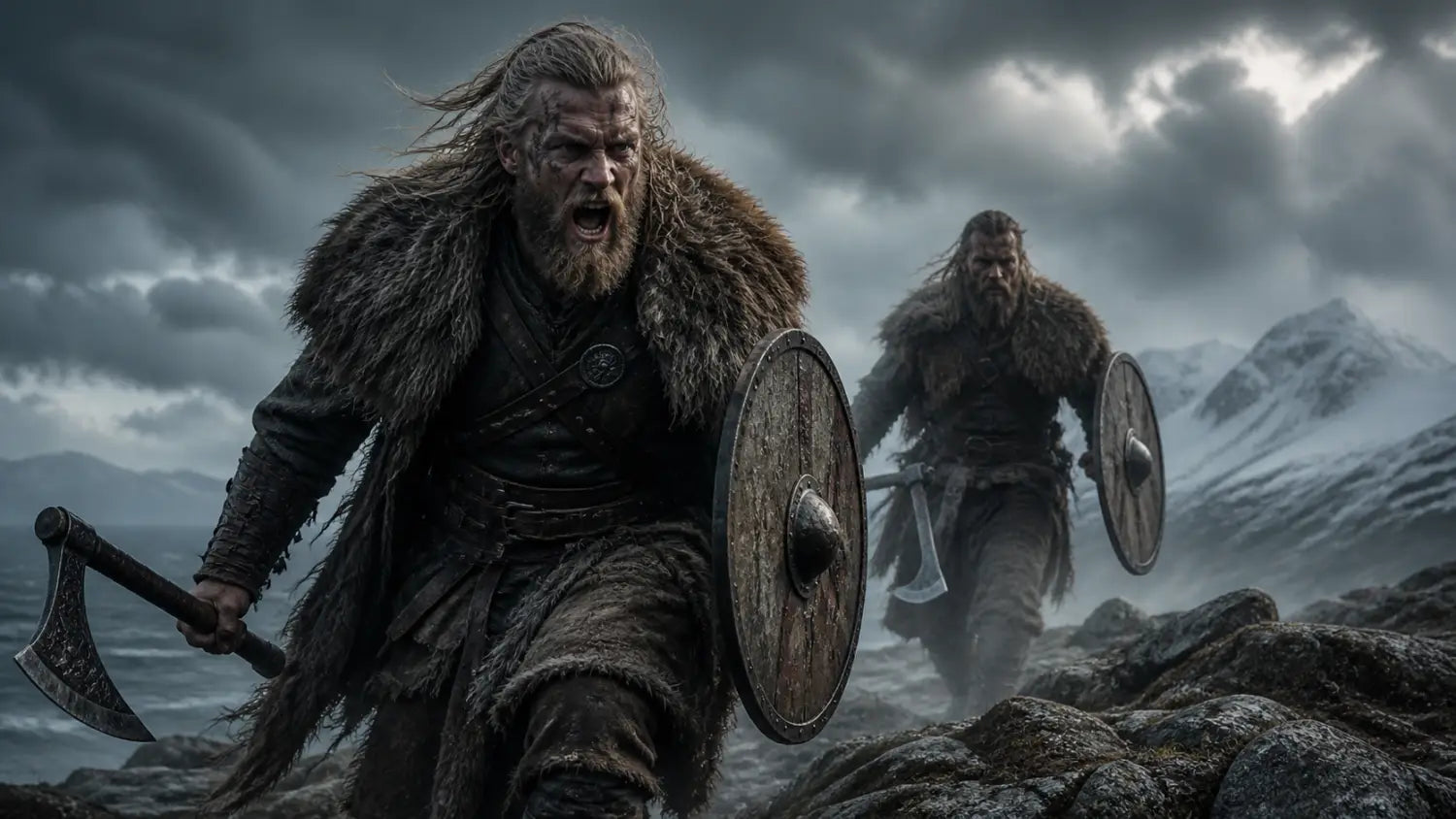
In the sagas, berserkers are often described as men who fought with overwhelming ferocity. They were said to rush into combat with little concern for pain, danger, or death. Their presence on the battlefield was meant to break morale before the first blow even landed.
Who Were the Berserkers?
Berserkers were believed to be specialized Norse warriors, often tied to kings, war leaders, or elite fighting groups. In some sources, they appear as loyal retainers. In others, they appear as dangerous men whose violence made them feared even outside war.
This is part of what makes them so compelling. The berserker was not simply a “strong Viking.” He stood apart. He was a man marked by extreme battle energy — one who could become terrifying not only to enemies, but sometimes even to allies.
In saga tradition, berserkers are described as:
- Fierce and aggressive in battle
- Resistant to fear and pain
- Capable of entering a trance-like rage
- Closely associated with animal power, especially the bear or wolf
- Difficult to control once battle fury had taken hold
Some accounts also connect them with Óðinn, one of the central gods of the Norse world, who was associated not only with wisdom and kingship, but also with battle frenzy, death, and altered states of mind. This connection strengthened the idea that berserkers were not merely physical fighters — they were warriors charged with a deeper, almost spiritual force.
What Was the Berserker Rage?
The most famous feature of the berserkers is their battle fury, often called berserker rage.
According to old accounts, berserkers could enter a state in which they roared, shook, attacked with terrifying force, and seemed almost unreachable by fear or injury. This state has fascinated historians, writers, and researchers for generations.
Descriptions of berserker fury often include:
- Frenzied aggression
- Loss of ordinary restraint
- Increased strength or at least the appearance of it
- A refusal to retreat
- Little reaction to wounds or danger
Of course, the sagas sometimes exaggerate for dramatic effect. That is important to remember. Not every detail should be read literally. Still, even if the descriptions are partly heightened, they likely reflect a real cultural idea: that some warriors trained themselves, or were believed, to enter an exceptional mental state in battle.
Modern theories about this rage vary widely. Some suggest ritual preparation, psychological conditioning, religious intensity, or group identity. Others have proposed alcohol, mushrooms, or other substances — but there is no solid proof that berserkers relied on drugs. That idea is popular, but far from certain.
The safest conclusion is that berserker rage was likely understood in the Norse world as a form of warrior transformation — a crossing from ordinary human fear into something darker, fiercer, and more dangerous.
Berserkers and Animal Symbolism
Animal symbolism is central to understanding berserkers.
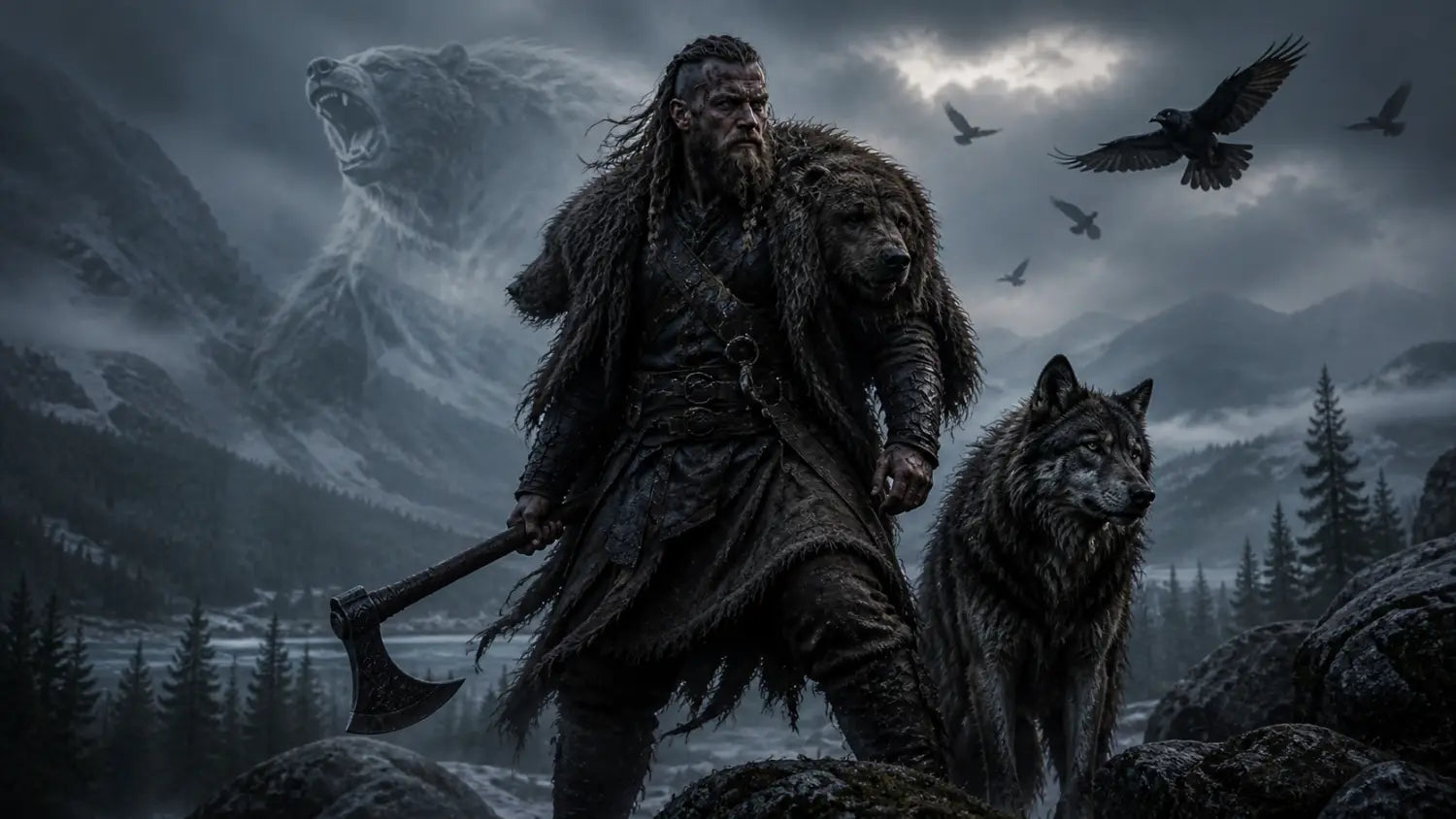
The bear was not just a creature of strength. It represented power, endurance, wild force, and raw dominance. A warrior linked to the bear was claiming more than physical toughness — he was claiming a kind of primal authority.
Related warrior types such as the úlfhéðnar were associated with the wolf rather than the bear. While berserkers and wolf-warriors are not always exactly the same, both represent the same deeper Norse idea: the warrior drawing strength from the untamed force of nature.
This symbolism mattered because Norse culture did not see battle only as military action. Battle was also identity, status, fate, and reputation. A warrior who took on the image of the bear or wolf was stepping into a role larger than himself.
Were Berserkers Real?
This is one of the most common questions — and the honest answer is: probably yes, but not exactly as later legend describes them.
Most historians agree that berserkers were likely based on real warrior traditions or real fighting groups. However, the most extreme stories about them were preserved in sagas written down later, often after the Viking Age itself. That means some details were probably expanded, dramatized, or shaped by storytelling.
So the berserkers were likely real in some form — but the fully unstoppable, near-supernatural warrior may be partly literary.
This does not make them less important. In fact, it makes them more interesting. Berserkers sit exactly at the point where history and legend meet. They show us how the Norse world understood warrior identity, fear, power, and the dangerous line between honor and chaos.
Why Were Berserkers Feared?
Berserkers were feared not just because they were strong, but because they seemed unpredictable.
A disciplined soldier can be understood. A berserker, on the other hand, was imagined as a man who had crossed into a different state altogether. That made him frightening in a deeper way.
He represented:
- Loss of control
- Unstoppable violence
- Willingness to die
- Refusal to submit
- A warrior spirit pushed to its extreme limit
In a world where reputation mattered deeply, even the idea of such a warrior carried power. To face a berserker meant facing someone believed to have abandoned hesitation.
The Decline of the Berserkers
As Norse society changed and political order became more structured, the berserker figure became less acceptable. What once may have been admired in war could become dangerous in settled society.
Later legal texts and Christian influence also helped reshape how such warriors were viewed. Over time, berserkers were no longer seen primarily as elite fighters, but often as violent and disruptive men.
This shift is important. It shows how warrior ideals changed. The same ferocity that once inspired fear and respect could later be treated as lawless and unstable.
The Legacy of the Berserkers Today
Even now, the berserker remains one of the strongest warrior symbols from the Norse world.
He symbolizes:
- Unbreakable will
- Raw courage
- Battle readiness
- Defiance in the face of fear
- The dangerous edge between strength and fury
That is why the berserker still speaks to people today. Not because modern life needs blind rage, but because the image carries something deeper: the refusal to collapse under pressure.
The enduring appeal of the berserker lies in that inner force — the part of a person that stands firm, fights forward, and does not retreat when things become hard.
Berserkers in Modern Norse Style
For many people today, berserker symbolism is not about violence. It is about presence, strength, and unyielding spirit.
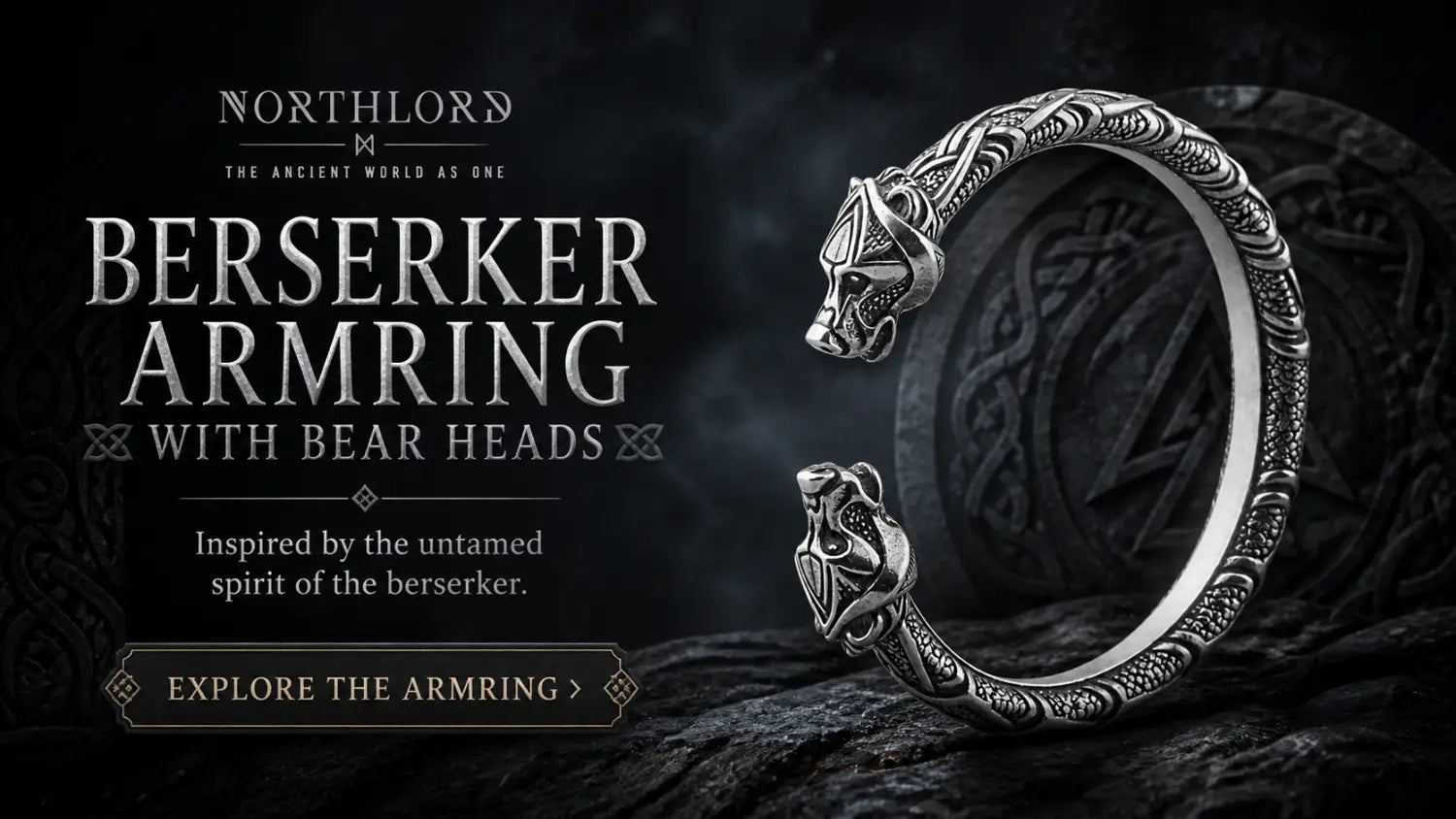
In jewelry, clothing, and visual design, the berserker theme works because it communicates something immediate: intensity without softness, discipline without weakness, and power rooted in the old warrior world. It belongs naturally in a modern Norse aesthetic because it carries both historical depth and emotional force.
Whether worn as a pendant, represented in artwork, or explored through writing, the berserker remains one of the clearest symbols of fierce inner resolve.
Final Thoughts
The berserkers stand among the most unforgettable warrior figures of the Norse world. Whether viewed as elite fighters, legendary warriors, or a blend of history and saga tradition, they represent a powerful idea: that battle is fought not only with weapons, but with spirit.
Their legacy survives because it speaks to something timeless — the ability to confront fear, endure pressure, and move forward with force when others would break.
That is why the berserker still matters. Not as a fantasy caricature, but as one of the rawest and most striking symbols of warrior strength ever preserved in the old North.